Showing posts with label Academic Writing. Show all posts

Wednesday, April 29, 2026

Essay Writing Format: The Complete Guide to Structure, Style, and Academic Success

Essay writing format is one of the most important skills you must build.

No matter if you are a college junior struggling to write a 20+-page research paper or a high school student writing their first five-paragraph essay, writing format is important for everyone.

A strong format gives your thinking a way to deliver it on paper.

It tells your professor that you know how to organize essay ideas, build arguments, and communicate authority.

Essay Writing Format: The Complete Guide to Structure, Style, and Academic Success: eAskme

Other people are reading: How Early Assumptions Shape Pedestrian Accident Cases More Than Evidence Itself in Pensacola, FL

Today, I am sharing everything you must know about essay formatting, structural skeleton, academic style rules, assignment types, paragraph-level mechanics, and format variations.

You will learn:

  • What Is Essay Writing Format?
  • Standard Academic Formatting Guidelines
  • Citation Styles: MLA, APA, and Chicago
  • Essay Format by Type
  • Common Essay Formatting Mistakes to Avoid
  • Essay Format Checklist

By the end of this article, you will have an actionable blueprint to apply to an essay.

Essay Writing Format:

Essay writing format is the set of stylistic and structural implementations that impact how an essay is presented and organized.

It covers two dimensions:

  • Structural format: How ideas are arranged, such as introduction, body, and conclusion.
  • Visual format: How the essay looks on the page, such as fonts, space, margins, and citations.

Both dimensions matter for an excellent essay format. A brilliant essay in a nonstandard or cluttered format lost its value.

At the same time, a perfectly formatted article with no real value also fails. The end goal is to master both dimensions to present your idea in the best possible way.

The Three-Part Essay Structure:

The modern essay standard follows the three-part structure:

  • Introduction
  • Body
  • Conclusion

This format reflects how arguments are processed in different parts. It is necessary to explain what the audience is going to hear, hear it, and finally what they heard.

Here is the detailed breakdown of the essay structure:

The Introduction:

The introduction is where you leave the first impression. It can be one or two paragraphs long. You cover three things: hook, context, and thesis statement.

The Hook:

The hook is your opening sentence. It earns the reader’s attention before he commits to reading the whole essay.

Here are the categories of the effective hook:

  • Startling statistic: Add stats like reports, percentages, or numbers from the research document.
  • Provocative question: Ask like “if you have ever made this decision?”
  • Vivid anecdote: Write a brief story illustrating the stakes of the topic.
  • Bold declarative statement: Make a surprising or counterintuitive claim.
  • Relevant quotation: add a line from credible sources.

Note: Avoid generic openers like people have always, or throughout history, or dictionary defines.

Background Information:

After the hook, add two or four lines related to your header. Define key terms, scope, and historical context. It connects the hook with the thesis.

Do not over-explain everything. It is just the body of your main content.

The Thesis Statement:

It is one of the most important parts of the introduction. It explains what your reader can expect from your essay.

A thesis should be:

  • Specific: Example, prolonged use of TikTok and its impacts.
  • Arguable: Claims that someone could disagree.
  • Position: Position the last sentence of your introduction correctly.
  • Proportional: keep it concise for a short essay and complex for a long essay.

Weak thesis: Example is Climate change is a serious problem."

Strong thesis: An example is that without bending federal carbon emissions, corporate self-regulation will remain insufficient.

The thesis should make a claim and provide reasoning.

Body Paragraphs:

Body paragraphs are where arguments live. It proves your thesis. Make sure that each of your body paragraphs contains a unit of argument.

Introduce the main point, support with evidence, explain the evidence, and move to the next point.

Five-paragraph essays often have three body paragraphs. Research papers and analytical essays can have up to 10 or more paragraphs.

The Topic Sentence:

The topic sentence is in the paragraph about the thesis of the essay. It announces the paragraph claim.

A strong topic sentence covers three things:

  • Introduction to the paragraph's main point
  • Connects that point back to the thesis
  • Establishes a logical position in the essay's overall argument

Example: “The most damaging effects of social media on teens' mental health are disruption of sleep patterns.”

This line tells the readers what the paragraph is about.

Supporting Evidence:

After the topic sentence, add supporting evidence.

You can include:

  • Statistics and data
  • Direct quotes from credible experts
  • Case studies or examples
  • Historical precedents

In academic essay writing, it is a must to cite evidence. Uncited claims are often at risk of plagiarism and carry no academic weight.

Also, add an explanation to your evidence.

Analysis and Warrant:

It is the most common section that essay writers skip.

It separates paper A from paper B.

After explaining the evidence, you must prove how it connects with your thesis.

Ask yourself:

  • So what?
  • Why does this evidence matter?
  • What does it prove?
After that, write the answer.

Example: “Research suggests that social media algorithms eliminate the psychological buffer zone between daily stress and sleep onset.”

This analysis connects dots and builds connections.

Transition Sentences:

End body paragraph with a sentence to summarize the contribution or bridge to the next point. A smooth and strong transition is necessary.

Topic jumps signal a disorganized essay.

Weak transition example: “I will talk about social comparison.”

Strong transition example: “disturbed sleep patterns cause psychological harm. The psychological toll of social comparison presents a threat to adolescent well-being.”

The Conclusion:

The Conclusion is the third part of the essay structure.

It is not a summary, but it works as a synthesis. Where a summary only explains what was said, synthesis displays how the essay parts connect to reveal something.

Restate the Thesis:

Revisit your thesis without repeating it.

Use different words and phrases. Restate the claim with depth, acknowledging the fact that your reader has understood everything.

Original thesis example: Prolonged use of TikTok contributes to increased anxiety in adolescents.”
Restated in conclusion: The evidence makes it clear that TikTok’s design systematically erodes adolescent mental health.

Synthesize Key Points:

Touch every major argument in conclusion. Do not repeat them. Use two or three sentences. Do not add any new evidence to this part.

The Closing Statement:

End the sentence with options like:

  • A call to action
  • A broader implication
  • A return to the hook
  • A forward-looking statement

Citation Styles:

The citation style changes according to the institution and discipline.

Here are the 3 major citation formats:

MLA Format (Modern Language Association):

MLA format is widely used in English, literature, and the humanities. It uses the author’s last name and page number cited at the end of the page. 

APA Format (American Psychological Association):

APA format is used in psychology, social sciences, education, and nursing.

It uses the author's name and year. You can find it at the end of the reference pages. It requires a title page.

Chicago/Turabian Format:

It is used in history, arts, and philosophy.

You can find it in either footnotes or endnotes. It displays the author and date in citations.

Before writing, make sure you know which format your instructor requires.

Essay Writing Format by Type:

Essay Writing Format types: eAskme

Different essay types have the same basic structure.

Argumentative Essay Writing Format:

Argumentative essay format is one of the most common types of essay format. It uses a strong thesis and debatable claims.

In the body part, you can present evidence and counterarguments. This type of essay format acknowledges the opposition’s point of view systematically. 

Analytical Essay Writing Format:

It is a common type of essay format in history and literature courses.

It does not argue about position. You share how historical events unfold, create meaningful text, and achieve goals.

Close reading of the primary source discloses evidence.

Expository Essay Writing Format:

Expository essay format informs or explains without taking a personal side. It is common in introductory courses, science writing, and journalism.

You should focus on accuracy and clarity.

Narrative Essay Writing Format:

The narrative essay format is popular in colleges for creative and application writing.

It tells a story with clear insight. It also requires a thesis with a flexible structure.

Compare and Contrast Essay Writing Format:

It is the type where you compare two or more subjects. It can follow a point-by-point structure or a block structure.

Common Essay Formatting Mistakes:

Formatting errors are common in essay writing. But this mistake can cost grades.

Here are the most common essay formatting mistakes to avoid.

  1. Padding the introduction: Do not begin your essay with broad, vague statements. It just wastes the reader's time.
  2. Conclusion as a summary: Do not restate every paragraph's point.
  3. Orphaned evidence: Do not drop a quote or statistic into a paragraph without analysis. Always introduce and analyze every piece of evidence.
  4. One-sentence paragraphs: Write each paragraph with usually 4–8 sentences.
  5. Ignoring the word count: Do not write under or over the assigned word count.
  6. Informal language: Do not use contractions, slang, and first-person overuse.
  7. Inconsistent citation: Do not mix MLA and APA styles.

Essay Writing Format Checklist:

  • Before submitting your essay, go through this checklist:
  • Introduction contains a hook, background context, and a clear thesis statement
  • Each body paragraph opens with a topic sentence tied to the thesis
  • Every piece of evidence should have an analysis
  • Paragraphs end with a transition
  • Conclusion restates the thesis, synthesizes key points, and ends with a meaningful closing.
  • Font is Times New Roman 12pt
  • Spacing is double throughout
  • Margins are 1 inch on all sides
  • All sources are cited correctly in the required format
  • No new evidence or arguments appear in the conclusion

Standard Academic Formatting Guidelines:

Academic essays should follow the visual formatting standards.

Formatting Element Standard Specification
Font Times New Roman, 12-point; or Arial/Calibri 11pt
Line Spacing Double-spaced, block quotes and references
Margins 1 inch all four sides
Paragraph Alignment Left-aligned
Paragraph Indentation 0.5-inch first-line
Page Numbers Required
Header/Title Varies by style

Conclusion:

The essay writing format guide explains the three-part format, including the introduction, body, and conclusion.

It is necessary to endure this style. It forces essay writers to define arguments before making them.

Writers must provide evidence and reflect on implications.

Essay format is a tool. The best academic writers understand and follow rules. An excellent writer can go forth and backwards to depart from the set standards.

Master these essay writing formats.

FAQs:

How long should an essay introduction be?

A 5-paragraph essay should have 4 to 7 sentences, and a long research paper should have one or two paragraphs.

How many body paragraphs does an essay need?

The minimum number is 3 for a standard essay. Your number should match the complexity of your essay.

Do all essays need a thesis statement?

Yes.

What's the difference between a topic sentence and a thesis?

Topic sentences cover one paragraph's argument, while the thesis covers the entire essay’s argument.
Can I use first person ("I") in an academic essay?

It depends upon the discipline and assignment. MLA format often chooses the first person.

Should the conclusion introduce new information?

No.

Other helpful articles:

Tuesday, January 6, 2026

11 Vocabulary and Grammar Tips for Better Essay Writing!

Grammar and vocabulary are essential for students as well as professionals. Essay writing cannot be impressive without an influential vocabulary.

Grammatical mistakes also ruin a well-written essay. For quality essay writing, it is necessary to fix grammar and improve vocabulary.

Gaurav once said that grammar suffers at the hands of people because people suffer from grammar.

If you have kids studying in primary schools or kindergarten, then you should follow the Helen Doron program.

But if you are at a level where you need professional and polished grammar, then you should read this guide.

Vocabulary and Grammar Tips for Better Essay Writing: eAskme

Other helpful articles: Enterprise SEO and AI Trends in 2026: To Stay Ahead!

Vocabulary and Grammar Tips for Better Essay Writing:

To improve your grammar and vocabulary, you need to read more, use verbs, learn sentence structure, cut down the passive voice, and proofread essays like an expert.

Here are the tips that will help you improve your vocabulary and grammar.

Improve Vocabulary for Better Essay Writing:

Vocabulary is the database of words in a particular language that is stored in your brain and processed whenever you need it.

Every person perceives words and language in different ways. It is the reason why some people use excellent words while others lack basic English words.

Tips to improve vocabulary for essay writing:

Read:

Reading is the first step to increasing English vocabulary.

The more you read English newspapers, blogs like eAskme, or British magazines, the better your vocabulary becomes.

Your subconscious mind stores words and their usage when you keep on reading the same type of words multiple times.

You can either read a new book every day or buy a newspaper subscription.

Word Journal:

A word journal is helpful for those who are born overseas and study languages other than English.

Non-native English speakers should keep a word journal handy.

Note new words, their definition, and their usage. Now try to use them whenever necessary.

It is best to take help with the word journal if you forget a word or the sentence structure.

Verbs:

In English, each verb has a strong and a weak form to represent it.

For example, went is the weak word. You can replace it with bolted and splinted.

The more you use strong verbs, the better your essay will become. It also helps with assignment writing projects.

Precise:

When writing English, essay writers have the habit of being pretentious.

You need to understand that you need words that fit in the sentence because they should be there, not because you want them to be there.

Be precise when writing an influential essay.

Roots:

To become proficient in English vocabulary, you must learn root words.

Take help from a dictionary or a book written by scholars.

It will help you understand the foundation of vocabulary and improve your essay.

Improve English Grammar for Better Essay Writing:

To write a quality essay in English, you must understand English.

These days, you can also take the help of grammar tools like Grammarly.

Yet, you still need a human eye to find any remaining errors.

Tips to improve grammar for essay writing:

Sentence Structure:

When writing English, follow sentence structure.

Use complex, simple, and compound sentences. It will create engagement and rhythm in your essay.

You should also decide whether you want to follow U.K. style or U.S. style English.

Active Voice:

To make your essay writing impactful, you must always write in the active voice.

It increases the impact and directs your essay’s tone.

In fewer words, you can write an engaging essay.

Filler Words:

Get rid of filler words. It only adds fluff to your essay.

Stop using words like basically.

It works as an unnecessary modification to your sentence structure.

Tense:

In which tense are you writing your essay?

If it is present tense, keep that tense formation throughout the essay.

Avoid shuffling between past and present tense multiple times.

Punctuation:

Punctuation mistakes are common. But you must avoid them.

To write professional and expert-level essays, you must fix all the punctuation errors.

Use colons and semicolons in the right places.

Read Out Loud:

Reading aloud is a habit that helps you catch mistakes and errors in your essay.

You can easily identify phrasing mistakes.

Fix them.

Now you have fixed vocabulary and grammar errors in your essay. The job is not yet completed.

How to Become a Better Essay Writer?

Follow these tips to become a better English essay writer.

You need to outline the essay structure before writing.

Edit and proofread essays at different stages. The more you practice, the better your essay writing will be.

Conclusion:

Now you know the ways to improve your vocabulary and grammar to write better essays; you must practice.

The more you practice, the more you can avoid grammatical mistakes. Learn new words every day, and it will significantly improve your vocabulary. You will become a better essay, resume, and academic paper writer.

Now write the essay and show your expertise.

Other helpful articles:

Wednesday, August 20, 2025

College Survival Guide: Assignments, Deadlines & Mental Health

Starting college is exciting, but let’s be honest it can also feel overwhelming.

Between juggling lectures, managing a social life, working part-time, and trying to meet never-ending deadlines, students often feel like they’re spinning plates.

For many UK and international students, learning to navigate assignments, handle pressure, and maintain good mental health is essential for academic success.

If you’ve ever searched for Assignment help UK during a particularly stressful semester, you’re not alone.

College life throws multiple challenges at once, and without a survival strategy, it’s easy to feel burnt out.

This guide breaks down practical ways to manage your workload, stay on top of deadlines, and protect your mental well-being all while making the most of your time as a student.

College Survival Guide: Assignments, Deadlines & Mental Health

The College Assignment Challenge

Assignments are at the heart of academic learning.

They’re designed to test understanding, analytical skills, and research abilities.

But when they start stacking up alongside multiple deadlines, stress levels can rise quickly.

Common struggles students face with assignments:

  • Difficulty understanding assignment requirements.
  • Lack of time due to other academic or personal commitments.
  • Struggling with research and credible sources.
  • Poor time management leading to last-minute panic.
  • Balancing assignments with part-time jobs or internships.

This is where academic assignment help and better organizational strategies can make a real difference.

By learning how to structure your work, allocate time effectively, and make use of available writing services, you can turn assignments from a source of anxiety into an opportunity for growth.

Understanding Deadlines – Why They Matter

Deadlines aren’t just about pleasing your lecturers they’re a crucial part of building self-discipline and professional skills.

In the workplace, meeting deadlines can be as important as the quality of the work itself.

Why deadlines are important:

  • They ensure fairness by setting the same time limit for all students.
  • They prepare you for time-sensitive work in your future career.
  • They help you avoid the stress of last-minute rushing.
  • They encourage planning and prioritization.

Missing deadlines not only affects grades but can also create a domino effect on other assignments.

This is why students often seek assignment writing help not to skip the work, but to better manage their time and workload.

Balancing Assignments and Mental Health

The reality is that academic stress can impact mental health if left unchecked. Late nights, endless caffeine, and racing against the clock can lead to exhaustion, anxiety, and burnout.

Signs your workload is affecting your mental health:

  • Trouble sleeping or excessive fatigue.
  • Difficulty concentrating.
  • Loss of motivation or interest in studies.
  • Feeling anxious or overwhelmed.
  • Frequent headaches or unexplained physical symptoms.

Protecting your mental health is just as important as completing your assignments.

The key is finding a balance being productive without pushing yourself to the point of collapse.

Top Strategies for Managing Assignments Effectively

Top Strategies for Managing Assignments Effectively

Here’s a practical step-by-step method to manage assignments without letting stress take over.

1. Break Down Each Assignment

Don’t look at an assignment as one giant task.

Break it into smaller steps:

  • Understand the question and marking criteria.
  • Conduct preliminary research.
  • Draft an outline.
  • Write in sections.
  • Revise and proofread.

2. Use a Planner or Digital Calendar

Organize deadlines visually. Mark submission dates and work backwards to create mini-deadlines for each stage of the assignment.

3. Prioritize Based on Urgency and Importance

Some assignments may be worth more marks or due sooner. Use the Eisenhower Matrix (urgent vs. important) to decide where to focus first.

4. Allocate Realistic Study Hours

If you have three assignments due in two weeks, allocate specific time slots for each rather than switching between them chaotically.

5. Seek Guidance When Needed

This could mean asking your lecturer for clarification, discussing with classmates, or using online assignment help for expert input.

The Role of Assignment Help in Student Success

Some students hesitate to use assignment help services because they worry it’s “cheating” or that it won’t actually help them learn.

However, when used responsibly, it’s a form of academic support just like attending tutoring sessions or study groups.

Benefits of using professional academic support:

  • Access to subject experts for clarification.
  • Help with understanding complex topics.
  • Assistance with structuring essays, reports, or dissertations.
  • Time-saving research support.
  • Guidance in meeting formatting and referencing requirements.

A credible assignment help website will focus on helping you learn, not simply handing over a finished piece of work.

It’s about gaining the tools and knowledge to complete your assignments more confidently.

How to Choose the Right Assignment Helper

Not all academic support services are created equal.

Choos the right assignment helper to make the difference between simply finishing an assignment and truly understanding the subject.

Look for these qualities:

  • Subject matter expertise.
  • Transparent pricing with no hidden costs.
  • Clear plagiarism-free guarantees.
  • On-time delivery record.
  • Positive student feedback and reviews.
  • Focus on guidance, not replacing your effort.

Time Management Hacks for Students

Balancing multiple responsibilities requires more than good intentions it needs smart strategies.

Practical time management tips:

  • The Pomodoro Technique: Work in 25-minute focused sessions followed by 5-minute breaks.
  • Batch similar tasks: Group reading, note-taking, or editing together for efficiency.
  • Limit distractions: Use apps like Forest or Cold Turkey to block social media.
  • Set study boundaries: Avoid working in bed to keep your brain in “study mode.”

The Link Between Deadlines and Mental Well-being

The Link Between Deadlines and Mental Well-being

Deadlines don’t have to be stress-inducing. In fact, when handled right, they can reduce anxiety by creating structure.

Ways to make deadlines less stressful:

  • Start earlier than you think you need to.
  • Create buffer time for unexpected delays.
  • Reward yourself for meeting mini-deadlines.
  • Avoid comparing your progress with others.

Remember, self-compassion is important missing a deadline once in a while doesn’t define your abilities. The goal is consistency, not perfection.

When to Seek Academic Support

Recognizing when you need help is a sign of strength, not weakness.

Situations where support can help:

  • You’ve missed several deadlines and can’t catch up.
  • You don’t understand the assignment requirements.
  • You’re balancing studies with demanding personal responsibilities.
  • You need expert input for a subject outside your comfort zone.

Whether it’s peer study groups, lecturer consultations, or professional assignment help UK, the aim is to keep your academic journey on track.

The Importance of Mental Health Resources

Many colleges now provide counseling services, wellness workshops, and stress management sessions for students. Combining these with academic planning can greatly reduce the pressure.

Mental health tips for students:

  • Get regular exercise to boost mood.
  • Maintain a consistent sleep schedule.
  • Practice mindfulness or meditation.
  • Talk to friends, family, or counselors when stressed.
  • Avoid excessive caffeine or energy drinks before bed.

Assignment Help and Long-Term Skills

One misconception is that assignment writing help only benefits the short-term.

In reality, quality guidance can teach you long-term skills like:

  • Better research methods.
  • Effective writing techniques.
  • Stronger critical thinking.
  • Improved time management.
  • Enhanced problem-solving abilities.

These are all valuable in both academic and professional settings.

A Balanced Approach to College Life

While it’s important to work hard, it’s equally vital to take care of yourself.

A balanced approach means:

  • Studying smart, not just hard.
  • Making time for hobbies and social connections.
  • Seeking help when needed.
  • Maintaining physical and mental health.

College is a time to learn, grow, and prepare for the future but that doesn’t mean sacrificing well-being for grades.

Conclusion:

Assignments and deadlines are an unavoidable part of college life, but they don’t have to control your every waking moment.

Students should develop effective time management skills, prioritize mental health, and make smart use of resources like assignment help services to thrive academically.

For those who feel overwhelmed, using a trusted assignment help website can provide valuable guidance and structure helping you stay on track while still building your own skills. 

A reliable service like Assignment In Need offers the type of expert support that empowers students rather than replacing their effort.

College isn’t just about ticking off assignments it’s about developing skills, resilience, and balance that will serve you for life.

With the right strategies, deadlines can be met without compromising mental health, allowing you to make the most of your academic journey.

Other helpful articles:

Saturday, April 19, 2025

How to Write a Strong Academic Reflection Paper?

Academic reflection essays are a common type of university and college writing assignment in the UK.

Whether one is studying healthcare, social sciences, humanities, or education, students are often asked to reflect on their learning experience, theory, or own development in academic contexts.

A reflection essay differs from essays or reports in that it demands a greater level of personal engagement and critical thinking alongside academic formality.

For students seeking assignment help on composing a strong reflection paper, this essay explains what constitutes a good academic reflection, how to organize it well, and how it can be made academically compliant.

How to Write a Strong Academic Reflection Paper?

What Is an Academic Reflection Paper?

An academic reflection paper is a piece of writing that allows students to critically analyze their experience, thinking, or understanding on a given topic, event, or concept.

It is not a diary entry—reflection papers are formalized, evidence-based, and meant to show critical thinking and growth.

Unlike creative writing, academic reflections must be referenced, well-organized, and supported by course theories, readings, or practice. It's a blend of personal comprehension and scholarly engagement.

Why Are Reflection Papers Important?

Reflection papers are increasingly used in UK universities to:

  • Encourage deeper understanding of course content.
  • Foster self-awareness and professional development.
  • Develop critical analysis and evaluative thought.
  • Demonstrate theory-practice links.
  • Enhance independent learning and academic progress.

These tasks are not checkboxes to mark off on them—they construct the skills used for lifelong learning and most career pursuits. That's why students typically resort to assignment assistance in a bid to master this kind of writing.

Essential Features of a Strong Reflection Paper

It's beneficial prior to delving into structure and writing tactics to understand what makes a reflection strong academically.

Critical Thinking

Reflection is not a regurgitation of what was read or what happened. It's the scrutiny of experience, identification of learning points, and thinking through how those learning points affect one's expertise or subsequent practice.

Link to Theory

Even private experience must be linked to theoretical frameworks. Use of theories, frameworks, or models (e.g., Gibbs' Reflective Cycle or Kolb's Experiential Learning) provides the academic sophistication.

Informal Insight Coupled with Formality

Though reflection papers are individual, the tone must be professional and structured. Avoid very colloquial language or emotional storytelling.

Clear Structure

The essay should have a reasonable structure—intro, body, and conclusion—and adhere to scholarly conventions like citations, paragraphing, and word counts.

How to Structure a Reflection Paper?

One of the most common questions that students ask for assignment help is how to structure their reflection so that it is of academic standard.

The following is a common and reliable format to follow.

How to Structure a Reflection Paper?

Introduction (10-15%)

The introduction must provide a concise summary of:

  • The subject or setting of the reflection (e.g., experience, course, event, or idea)
  • Why the reflection is significant
  • A concise overview of what the paper will cover

Tip: Don't jump straight into personal experience. Set the academic tone right at the start using course or theoretical background.

Main Body (70-80%)

This is where most reflection happens. Organize the body into logical sections or paragraphs, each addressing a distinct point.

Description (Context)

Keep this section brief—just sufficient to set the scene.

  • What was the situation, experience, or content?
  • What was the writer's role?

Example: "Through group work on practices of sustainability, the author was tasked with conducting research activities…"

Feelings and Initial Response

Consider first responses or thoughts.

  • How did the situation influence the writer?
  • Were assumptions or barriers?

Maintain an academic tone even when discussing feelings.

Evaluation and Analysis

Critical thinking must prevail in this segment.

  • What was done better or worse?
  • What influenced the outcome or action?

Use scholarly literature to support arguments.

Tip: Integrating citations at this stage shows that reflection is informed, not purely emotional.

Learning and Theoretical Connections

Connect personal experience with relevant theories or concepts.

  • Does the experience support or challenge academic models?
  • What insights emerged through analysis?

Using reflective models like Schön’s Reflection-in-Action or Gibbs’ Cycle can be effective frameworks here.

Future Implications

Conclude the body by addressing how the reflection influences future actions or understanding.

  • What would be done differently next time?
  • How has the author's thinking changed?

This part focuses on improvement and development, a significant aim in reflective writing.

Conclusion (10-15%)

Highlight the principal insights or take-home points. Don't add new information.

Repeat salient reflections.

Highlight how the experience contributes to academic or professional development.

A good conclusion reinforces the fact that the reflection was meaningful and grounded on academic knowledge.

Tips for Writing an Effective Reflection Paper:

Knowing the structure is only the beginning. Below are some additional techniques that enhance a reflection from good to excellent.

Tips for Writing an Effective Reflection Paper

Use Reflective Models

Using a reflective model gives structure and authenticity. Some of the most widely used models are

  • Gibbs' Reflective Cycle: Gives focus on description, feelings, evaluation, analysis, conclusion, and action plan.
  • Kolb's Experiential Learning: Explores concrete experience, reflective observation, abstract conceptualization, and active experimentation.
  • Rolfe et al.'s What So What Now What: A reduced yet scholarly model.

These models help facilitate reflection logically and critically.

Use a Formal Academic Tone

Although reflecting on your own personal development, do not write in very informal language or emotional exaggeration. Be objective and fact-based.

Bad example: I was really annoyed at the time.

Improved: The scenario originally elicited frustration, particularly due to communication failure, a challenge that has been cited in group dynamics literature (Author, Year).

Use First Person Only When Necessary

Reflection papers can be done in first person ("I"), but use it minimally. Emphasize analysis over personal experience.

Example:

Instead of saying "I believe I performed well," say "The outcome signals successful communication, in line with cooperative teamwork precepts (Author, Year)."

Support with Evidence

Academic reflection remains to be referenced. Refer to course materials, theory, and academic journals to underpin analysis and evaluation.

Lack of sources may cause a reflection to sound like a blog post—scholarly references make it scholarship-based.

Ensure Clarity and Flow

Present ideas in a clear manner. Use transition words and topic sentences to lead the reader through the reflection logically.

Successful transitions:

  • As a result
  • This experience helps to highlight
  • In contrast
  • Drawing on this
  • Hence, it can be argued

Proofread and Edit with Care

Before submission, check the paper for:

  • Grammatical and spelling errors
  • Correct referencing (Harvard, APA, or institution-specific style required)
  • Paragraphing and organization
  • Relevance to the initial task or brief

Students often seek assignment help at this stage to ensure that their work is okay before submitting.

Avoidable Mistakes:

Even well-meaning reflection can go wrong if some pitfalls are not addressed. Avoid the following:

Over-describing the experience

Stick to the level of detail required—most of the paper should be analysis, not description.

Forgetting scholarly sources

Reflective doesn't have to mean relaxed. Always refer back to readings or theories.

Vague conclusions

Steer clear of generic or redundant endings. Instead, wrap up important points and look ahead to future actions or shifts in outlook.

Overlooking the brief

Double-check the assignment criteria. Word limit, referencing method, and key issues must all be dealt with to prevent losing marks.

Final Checklist Before Handing In

The following is a speedy guide run-through so your reflection paper is ideal to be marked:

  • Is the paper strictly following the introduction-body-conclusion structure?
  • Is experience being examined and not merely explained?
  • Is the use of academical theory and resources effective?
  • Is the writing formal, straightforward, and well-structured?
  • Is word length fulfilled?
  • Is the referencing timely and consistent?
  • Are the spellings and grammar checked?

Assuming you check all the boxes, you are likely well on your way to an A-grade reflection. Yet if unsure, seeking external assignment help can prove to be reassuring.

Conclusion:

Crafting an effective academic reflection paper is about finding the balance between personal reflection and scholarly rigor.

It is not merely a matter of recounting events—students need to think critically, relate to theory, and demonstrate improvement.

Whether reflecting on a project, lecture, placement, or idea, the same holds true: structure, clarity, and critical reflection.

For an individual who is struggling or in doubt, a professional assignment help agency like Assignment in Need can give structured aid as far as UK academic expectations are concerned. Extra effort may be the difference between passing and gaining a distinction.
 
Other resources:

Thursday, March 7, 2024

Where to hire Academic Writing Specialist - Best tips from Skillhub

Writing is at an all-time low. People write less daily than they used to. They do not have a good vocabulary—the inappropriate use of language results from not reading complex texts or texts.

With the rise of the internet, people have begun paying professionals to write academic texts for them.

It is a good investment for many since they save plenty of stress, and the amount charged for an academic paper is not drastic.

So do not struggle with academic writing if you do not have to; hire our academic writers at Skilhub for a high-quality product to guarantee success.

What is Academic Writing, and What Does an Academic Writing Specialist Do?

Where to hire Academic Writing Specialist - Best tips from Skillhub: eAskme

It is a type of writing that expresses information, research, and ideas across the academic community. There are two types:

  • Scholarly writing, which is used in schools. Whether it is used in high school or university, it doesn't matter.
  • Expert academic writing serves a different purpose. The contents of this type of writing are intended for publication. The text can be published in journals, articles, etc.

Professional writers use their language knowledge to research, conceptualize, edit, and write different works.

The works could be poems, articles, manuscripts, resumes, etc. They are found in different genres and sectors in the writing world.

How to Decide Which Professional Academic Specialist Is Best?

Many individuals market themselves on the internet as professional writers. Making a shortlist of the best offered isn't easy. Some criteria for shortlisting specialists are:

  • You should check how they fit with the goal you are pursuing. Someone can have a great resume of accomplishments, but they might not suit you best. Try to find someone who understands the proper diction, terminology, and phrases for the paper's purpose.
  • Your potential hire needs experience. Look up and check out the person's previous work. If you like the work done previously, this should indicate that this is the right person to hire.
  • Always check for reviews from people that worked with the writer before. Some people might abuse the power of review by writing negative reviews for everything. However, those are usually in the minority; reviews are a great way to predict whether someone is an option for hire.

Source: https://unsplash.com/s/photos/academic

People's Struggles with Academic Writing:

Some people went to Reddit to express their struggles with creating academic texts.

The user feels he has a limited vocabulary and often comes across as disorganized or incoherent.

They mention that reading more books could be a solution.

It is also said that the university materials to read and analyze texts in incomprehensible jargon.

Advice Received:

  • They shouldn't worry about vocabulary. Quality texts must include simple and to-the-point language. Simple texts ensure the reader has no trouble reading and understanding the content.
  • Start writing more and try to co-author. Take some of your free time to practice composing texts. Also, try to find someone experienced whom you can learn from and help them write something.

Tips on How to Become an Expert in Writing:

Unfortunately for the Reddit user, he doesn't know of Skillhub yet. Here are some content writing tips from us:

  • Create an exciting headline. Like a book, the cover can sell a book almost 100% of the time. Create an attention-grabbing title that answers what a possible client wants to know.
  • Make a straight-to-the-point introduction. A lot of people start something and don't finish it. Create something that will hook the reader into the topic.
  • Know which audience you are targeting. You should know the demographics of the audience you are trying to sell the article to. As well as all the audience's interests, wants and needs.
  • Focus on one point. Try focusing on only one idea to avoid confusing the reader.
  • Engage yourself. Provide relevant information. Be authentic in the article, don't copy someone else.
  • The author must neatly do the outline. There has to be a specific flow and structure to the article.
  • Don't only paraphrase. Include tips, tricks, stats, examples, and other people's experiences to make the article fun.
  • Create your style. Make a unique style that you will be known for. It could be a unique structure of the text, language, or anything else; just ensure it's authentic.

Potential Difficulties:

  • Confidence in your writing. Many people face the issue of trusting themselves to create a high-quality end product. They might worry that the words need to be fancier or the structure needs to be more organized. Everything takes time and practice; if you put in enough time, your confidence in yourself will increase gradually.
  • Some may feel that they are not good enough if they hire a professional to develop content for the text. Paying someone to do something for you may come across as not trying hard enough or a weakness to some people. But in the end, why suffer if you need a professional capable of making something great?
  • Knowing that the product they paid for is suitable. The chances are if you are paying a professional, you don't necessarily specialize in the subject as much as the paid professional. Unknowingness can make you vulnerable to scams since you might not know the end product is terrible.

Resumes are also a form of academic writing; hire a professional at Skillhub to ease your worries.

FAQ:

Who do I hire?

Analyze your possible candidates. Shortlist them based on your wants, needs, fit, reviews, references, experiences, and accomplishments.

After creating your rankings based on these criteria, consider price and availability.

All of the previous steps should lead you to your favorite candidates.

Is Skillhub a good platform for hiring professionals?

According to the top resume reviews - websites with lists of the best professional writing services near you, we are.

If the website isn't enough, you should check out our customer reviews, which show almost nothing but positivity.

What is the process for hiring academic writers through Skillhub?

First, post a job on Skillhub, leave instructions, and wait for offers. After that, the applicants start piling up, offering their services.

View their profiles, experience, and skills. Once you have found your professional, all that's left is the payment.

You can pay when the project is completed directly through the platform.

Works Cited:

  1. Skillhub. Top 10 Content Writing Tips That Make You a Writing Expert. 22 Jan. 2023.
  2. Professional Academic Writers for Hire | Skillhub.
  3. Smith, Sheldon. "What Is Academic Writing?" Www.eapfoundation.com, 3 Feb. 2022.
  4. "R/Academia - How Can I Improve My Academic Writing Skills?" Reddit, 2023.
  5. ‌"What Does an Academic Writing Specialist Do? Role and Responsibilities." Glassdoor.
  6. "How to Hire Top Academic Writers." Upwork.

If you still have any question, do share via comments.

Don’t forget to share it with your friends and family.

Don't forget to join the eAskme newsletter to stay tuned with us.

Other handpicked guides for you;

Tuesday, May 23, 2023

EssayPay: Ultimate Solution for Stress-Free Essay Writing!

Are you a student struggling with the never-ending coursework assignments?

Are you feeling overwhelmed by the countless essays and papers you have to complete in a short time frame?

If so, you are probably looking for an easier way out of this seemingly never-ending cycle.

Fortunately for you, EssayPay is here to provide such help!

EssayPay, Ultimate Solution for Stress-Free Essay Writing: eAskme

This post will explain how the service can make your essay-writing process less stressful and more efficient.

We'll cover topics like why to choose EssayPay over other solutions available on the market and the additional benefits of using services.

So, let's get right into it!

What Services Does EssayPay Provide?

These services aim to cater to various academic writing needs:

  • Essay writing: They assist with different types of essays, including argumentative, narrative, descriptive, and expository essays.
  • Research papers: EssayPay helps students with research paper writing, from conducting research on a given topic to organizing and presenting the findings in a structured format.
  • Term papers: They also assist with term papers, which are typically longer, more in-depth assignments that require extensive research and analysis.
  • Dissertations and theses: EssayPay supports graduate-level projects, such as dissertations and theses, guiding students through the research, writing, and editing processes.
  • Coursework: They help students complete various coursework assignments, such as case studies, lab reports, literature reviews, etc.
  • Admission essays: EssayPay assists with admission essays or personal statements, helping students craft compelling narratives for college or university applications.
  • Editing and proofreading: Besides writing, they offer editing and proofreading services to ensure that a student's work is free from grammatical errors and follows proper formatting guidelines.
  • Presentation and speech writing: They also assist with creating PowerPoint presentations, speeches, or other oral presentation materials.

Is EssayPay Legit?

EssayPay is legitimate and trustworthy because it adheres to ethical guidelines and prioritizes customer satisfaction by providing high-quality, original content like a reputable and professional writing service.

We can conclude its legitimacy on website quality, customer reviews, writer qualifications, guarantees, customer support, and secure payment methods.

Quality to Expect When You Pay for College Essay:

Several factors contribute to the high quality of EssayPay, ensuring that they provide exceptional and reliable assistance to their clients.

Here are some basic factors they consider:

Qualified and experienced writers

 EssayPay employs skilled writers with relevant academic backgrounds and experience in their fields of expertise.

Plagiarism-free content

 Originality is crucial in academic writing; therefore, a quality service must guarantee unique, custom-written papers and use plagiarism-detection tools to ensure the work's authenticity.

Timely delivery

 Meeting deadlines is essential for students. EssayPay delivers work within the agreed-upon timeframe to prevent late submissions and any associated penalties.

Revision policy

 They offer a revision policy, allowing clients to request modifications until they are satisfied with the final product.

Confidentiality

 Client privacy and security are vital. EssayPay guarantees confidentiality and implements secure data handling practices to protect client information.

Responsive customer support

 Providing prompt and efficient customer support through various channels (e.g., email, live chat, phone) is essential for addressing clients' questions and concerns throughout the writing process.

Clear pricing and policies

 A transparent pricing structure, along with well-defined terms and conditions, refund policies, and guarantees, helps build trust and set clear expectations for both clients and EssayPay.

Quality control

They have a system in place for monitoring and maintaining the quality of work produced by their writers, such as regular evaluations, customer feedback, and quality checks.

Prices and Discounts:

Prices and Discounts: eAskme

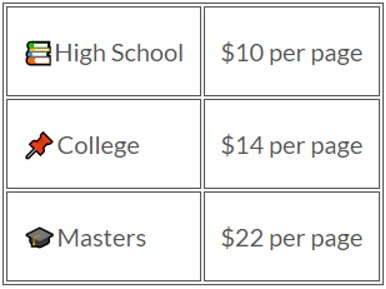
EssayPay offers various pricing structures based on the type of assignment, academic level, number of pages, and deadline.

They may also provide discounts for first-time clients, loyalty programs for returning customers, and occasional promotions during special events or seasons.

You can find more in this EssayPay review or on their site.

EssayPay.com Guarantees:

Plagiarism-free content

EssayPay ensures original, custom-written papers by using plagiarism-detection tools to verify that the work provided is unique and devoid of any copied content.

Timely delivery

They commit to meeting deadlines, helping students steer clear of late submissions and potential penalties.

Confidentiality

They guarantee the privacy and security of client's personal information, ensuring that your data remains confidential and is not shared with third parties.

Qualified writers

To assure high-quality work, this service engages knowledgeable and experienced writers who possess relevant academic backgrounds.

Revision policy

They provide free revisions within a specific timeframe. If a client is not entirely satisfied with the finished work, they can request revisions, and the writer will make the necessary adjustments until the client is content with the final product.


Reputation on the Web:

 Reputation on the Web: eAskme

We have analyzed several platforms with reviews on EssayPay.

In general, customers are satisfied with the essays they've got.

Here are some comments:

Exceptional Quality and Timely Delivery from EssayPay

As a student juggling multiple responsibilities, I've found EssayPay to be an invaluable resource.

Their team of qualified writers consistently delivers top-notch, plagiarism-free content that meets all my requirements.

The timely delivery has saved me from missed deadlines on several occasions.

I also appreciate their commitment to confidentiality, ensuring my personal information remains secure.

Trustworthy Writing Service with Great Customer Support

EssayPay has become my go-to writing service for all my academic needs.

Their exceptional team of writers always produces high-quality work that adheres to my instructions.

The customer support team is friendly and responsive, promptly addressing any questions or concerns.

The site's revision policy is also a great feature, ensuring any necessary changes are made until I am fully satisfied with the final product.

Conclusion:

EssayPay offers various academic writing services, including essay writing, research papers, term papers, dissertations, coursework, admission essays, and editing/proofreading services.

The service is trustworthy and legitimate, with qualified writers, plagiarism-free content, timely delivery, responsive customer support, and a strong commitment to client privacy and security.

They offer various pricing structures and discounts for first-time clients and returning customers.

Customer reviews are generally positive, highlighting the exceptional quality of the work, timely delivery, and responsive customer support.

Still have any question, do share via comments.

Share it with your friends and family.

Don't forget to join the eAskme newsletter to stay tuned with us.

Other handpicked guides for you;